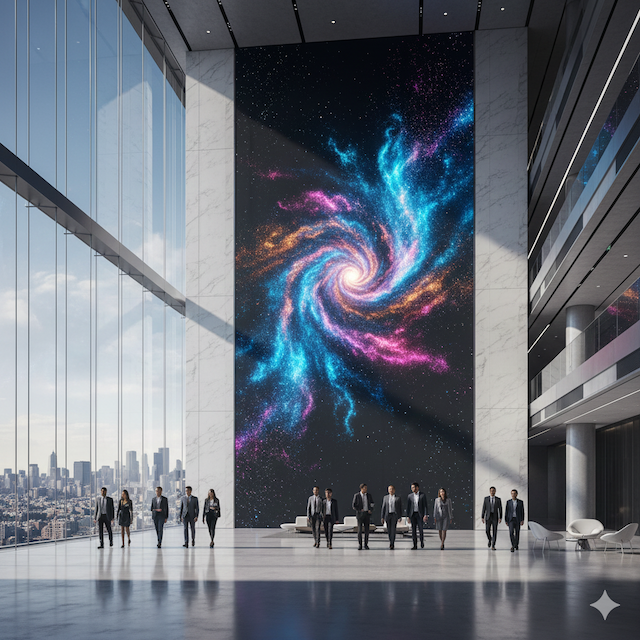
Creating truly seamless audio-visual experiences has long been a challenge in immersive design. The acoustic LED screen is the key enabling technology that dissolves the barrier between sight and sound. By allowing sound to emanate directly from the display surface, it creates a unified sensory canvas and unlocks revolutionary applications in film, exhibits, and luxury spaces. This white paper explores these transformative uses – from Virtual Production studios to museums and home theaters – and shows how sound-transparent, acoustically transparent displays are redefining immersion and creative design flexibility.
Virtual Production (VP) Studios: Solving On-Set Audio Challenges
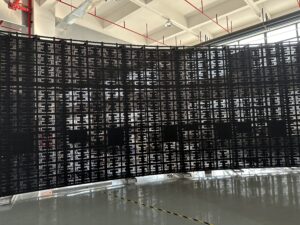
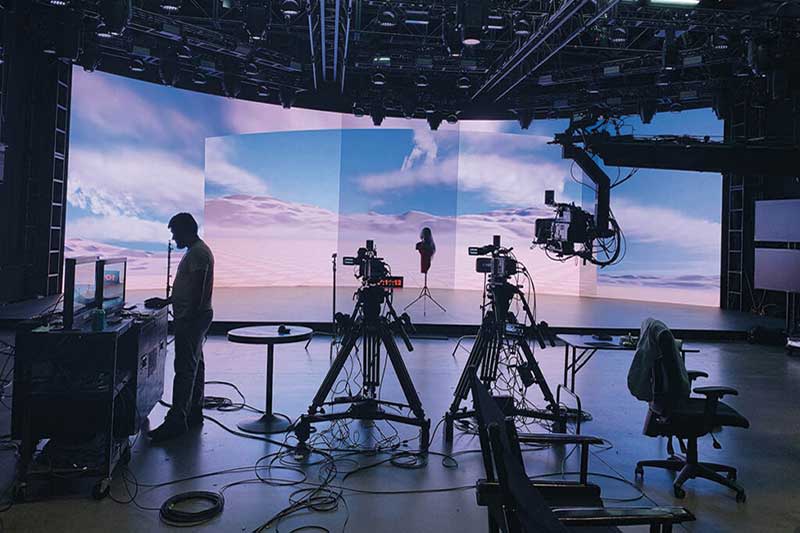
In traditional VP studios, LED walls create audio-capture problems: actors on a soundstage hear their voices and effects coming from loudspeakers off-screen, and boom mics pick up echoes from large solid walls. For example, standard LED volumes can become an “echo chamber” that requires sound blankets to mask bouncing reflections. Acoustic Transparent LED screens solve this by allowing sound to pass directly through the display, so that main speakers can sit right behind the video wall. In practice, the LED modules have precision-engineered perforations (or an acoustic cavity) that let audio travel forward with minimal obstruction. This makes voice and sound effects appear to originate exactly where the image is, rather than from side arrays.
Impact: The result is a dramatic simplification of the audio workflow. Directors and sound engineers can capture clean audio on-set through the volume, drastically reducing the need for post-production ADR and complex mixing. Actors experience on-screen sound cues in real time, improving performance, and producers save time and budget by avoiding costly audio fixes. In short, acoustic LED screens eliminate the classic VP audio gripe and elevate on-set realism to new heights.
| Aspect | Traditional VP Studio Setup | Acoustic LED VP Studio Setup |
|---|---|---|
| Audio Workflow | Speakers and mics separated – often requiring ADR and extensive mixing. | Speakers behind screen with direct sound – on-set audio captures match the visuals, reducing ADR. |
| Post-Production Needs | Heavy post-sync to fix audio visual mismatch; time-consuming editing. | Minimal ADR and syncing – audio is already aligned, speeding up editing. |
| On-Set Realism | Lower immersion – sound sources feel off-screen, harming performance. | High immersion – true “sound from the image,” enriching creative direction. |
| Cost Implications | Higher long-term cost: extra studio time, larger audio rig, and post-pro budget. | Lower total cost: consolidated AV infrastructure and leaner post workflow offset higher upfront screen cost. |
ted AV infrastructure and leaner post workflow offset higher upfront screen cost.
Key benefits for VP studios include:
- Immersive on-set playback (sound and image fused)
- Reduced crew intervention
- Simpler post workflows
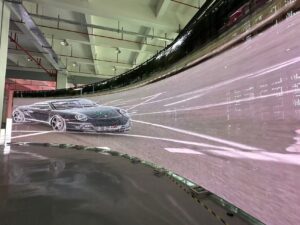
For example, Unilumin’s UCine LED cinema screen uses an acoustic cavity so the main speakers are hidden behind the large display – the same principle can be applied on VP sets for game-changing audio fidelity. Virtual Production teams gain the flexibility to design complex environments (even curved or ceiling panels) without audio compromise, thanks to acoustic-transparent LED technology.
Immersive Exhibitions and Museums: Unified Audio-Visual Environments
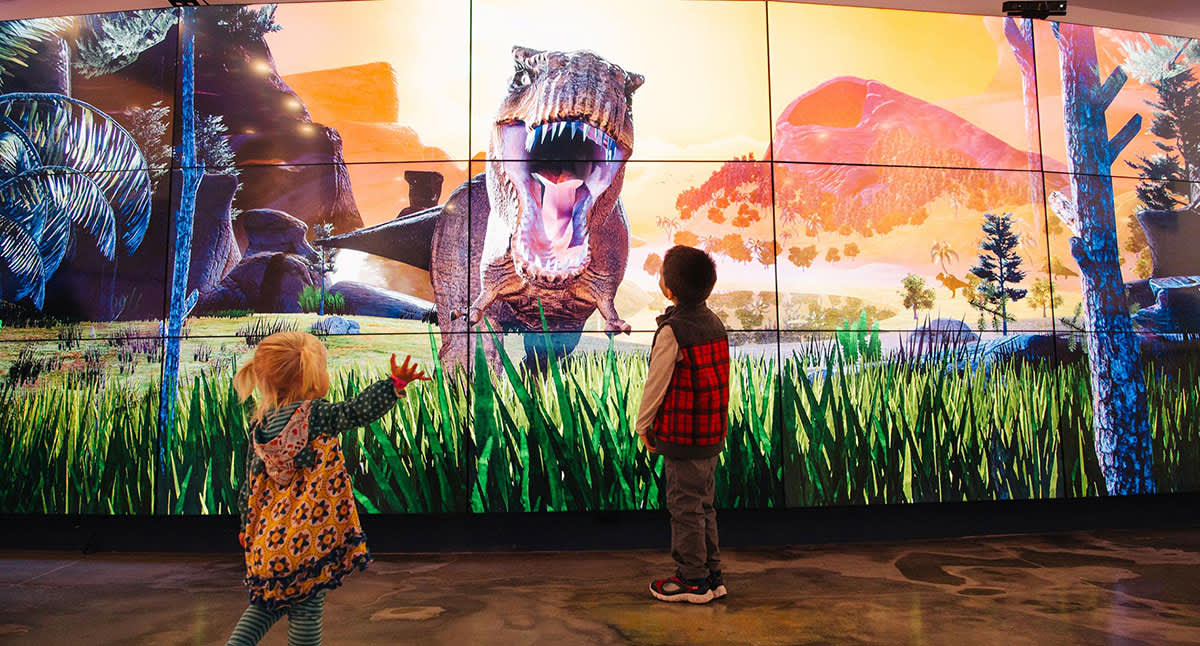
Museums and exhibition designers seek to create memorable visitor experiences, but traditional AV installations can break immersion. In a gallery, having loudspeakers mounted on walls or ceilings makes the sound clearly come from “elsewhere,” distracting the audience from the visuals. Acoustic Transparent LED screens enable museum exhibits to deliver sound exactly from the focal image, eliminating this disconnect.
By integrating speakers behind the display surface, curators can make narration, music, or effects emanate from the exhibit itself – whether it’s a historical scene, art installation, or interactive display.
Impact: Exhibits become more convincing and engaging. Without visible speakers, designers enjoy unprecedented creative design flexibility: walls and structures can be continuous or sculptural without speaker boxes marring the aesthetic. Visitors report higher immersion because they see and hear from the same apparent source. Space is used more efficiently – side or overhanging speaker arrays are no longer needed, freeing up room for exhibits or traffic flow. Altogether, acoustic LED walls allow museums and immersive events to build truly enveloping environments that align with the exhibit narrative.
Primary advantages in museum installations include:
- True Source Alignment: Audio comes from the displayed object or image, delivering a “sound from the screen” effect that captivates audiences.
- Design Freedom: With speakers hidden, exhibit halls can employ any shape or immersive projection surface – curved, dome, or wraparound – without audio trade-offs.
- Aesthetic Integrity: No bulky speaker grilles or enclosures to spoil a seamless art installation or video wall.
- Space Efficiency: Museums gain up to 50% more usable space by eliminating separate audio zones.
- Enhanced Accessibility: Clear, direct sound improves understanding of educational content and reduces listener fatigue.
These benefits make acoustic LED screens a powerful tool for architects and curators creating next-generation exhibitions and themed attractions.
Luxury Home Theaters: Integrating Sound into the Picture
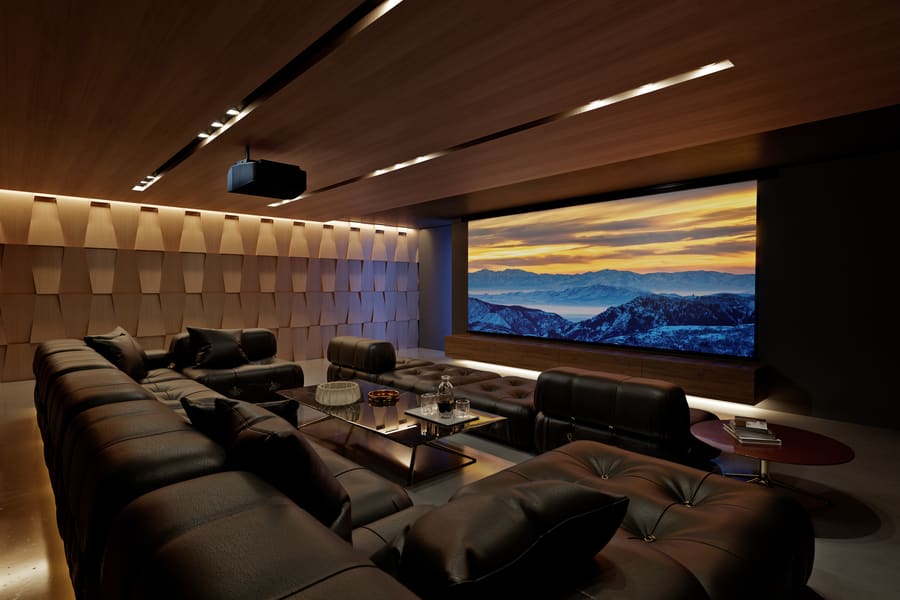
In high-end residential theaters, owners demand both stunning visuals and pristine audio without sacrificing design. Traditionally, this means fitting in-wall speakers or visible surrounds, which can conflict with the designer’s vision. Acoustic LED screens address this by integrating the sound system into the display surface itself. In practice, the main speakers live behind the screen, and the perforated or transparent LEDs allow the movie soundtrack to pass straight to the audience. The effect is that gunshots, raindrops, or dialogue all appear to come exactly from the on-screen action.
Impact: The ambiance of a luxury home cinema is dramatically elevated. Architects and designers can treat an entire wall as a single seamless element without worrying about hiding speakers. This means clean lines, minimalist décor, and flexible layouts. From a user perspective, the emotional impact of films and music is enhanced – explosions feel exactly “on screen” and whispered dialogue stays crystal clear, matching the Dolby Atmos intent. The result is a truly immersive audio-visual solution worthy of a bespoke home theater.
Key benefits for designers and homeowners:
- Seamless Aesthetics: Speakers are invisible, enabling sleek wall-to-wall displays and uninterrupted design schemes.
- Authentic Soundstage: Soundtracks emerge from the image, reinforcing realism – akin to the cinematic “sound and picture resonance” seen in cutting-edge auditoriums.
- Space Savings: No need for extra cabinets or acoustic treatments around screens, freeing up living area and simplifying installation.
- Custom Configurations: Screens can be curved or multi-panel, with matching acoustic transparency, giving designers more creative geometry.
- Convenience: An integrated system means one control set with no separate speaker wiring runs, reducing complexity for integrators and users alike.
Creative Design Flexibility & Business Impact
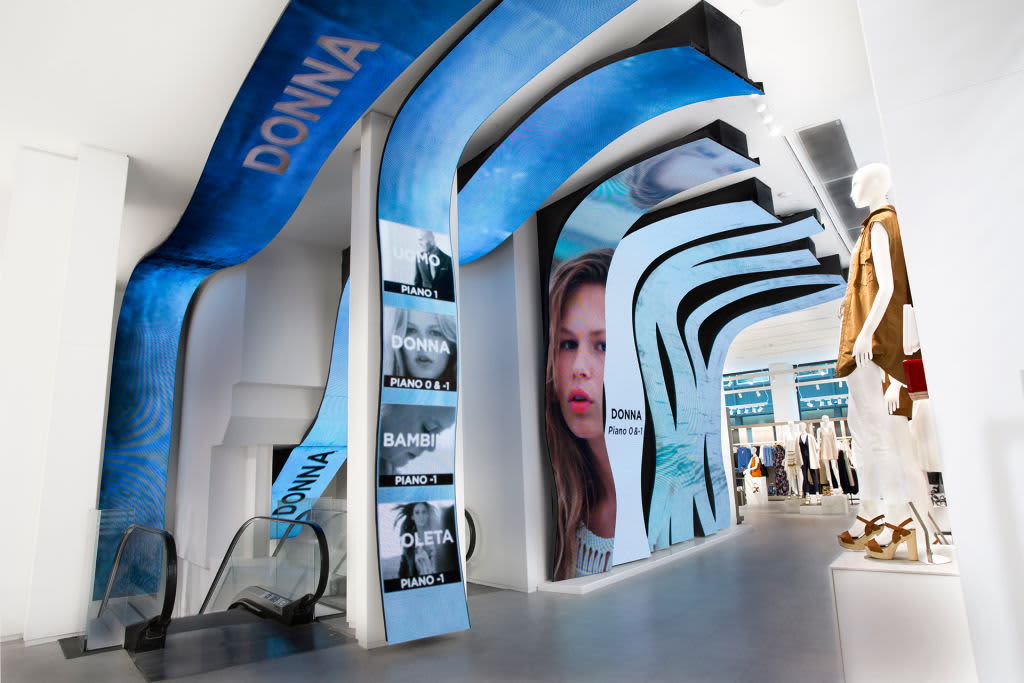
Acoustic LED screens provide a competitive advantage for creators and system integrators by removing long-standing design constraints. With speakers hidden, architects can implement truly minimalist interiors or bold, sculptural AV installations without compromise. This creative design flexibility empowers high-end venues – from flagship stores to corporate lobbies – to feature dazzling displays without visible technology. Spaces can be multi-functional for board meetings, product launches, or experiential marketing because the screen is the sound source, eliminating the need for cluttering side elements.
From a business perspective, early adopters gain differentiation. In an experience-driven market, offering next-level sensory immersion becomes a sales point: venues with acoustic LED envelopes stand out as cutting-edge. Moreover, the integrated design saves on installation and maintenance costs.
As one analysis notes, acoustic-transparent LED systems eliminate separate speaker arrays and reduce wiring complexity, cutting labor and long-term upkeeping. The global market is already moving this way – immersive display solutions are projected to grow at over 20% CAGR through 2030, with acoustic LED screens gaining traction in cinemas, themed attractions, and corporate installations. In other words, companies investing now can ride the wave of high-end Audio-Visual innovation.
Advantages of Acoustic LED in Design & Business:
- Architectural Freedom: Designers can cover walls and ceilings entirely with display without “speaker shadows,” crafting any form or pattern.
- Brand Experience: Seamless AV spaces become experiential marketing tools, such as for engaging product launch events or immersive retail pop-ups.
- Operational Efficiency: Integrated screens reduce the number of components (screens plus speakers) to install, lowering procurement and service costs.
- Future-Proofing: Installing sound-transparent LED positions a project for next-generation content like 4K, HDR, and object-based audio without re-engineering spaces.
- User Engagement: Venues report up to 40% increases in visitor or employee engagement when audio and video are fully unified.
Together, these factors mean that creative design flexibility is not just an artistic benefit but a strategic one: it gives architects and business leaders a way to exceed expectations without traditional trade-offs.
Conclusion: A Paradigm Shift and Adoption Checklist
Acoustic LED screens are more than an incremental upgrade; they represent a fundamental shift in immersive experience design. By uniting sound and image on the same surface, they create richer, more convincing worlds – whether on a virtual production set, under a museum dome, or in a home cinema. The key takeaway is that these “sound-transparent LED” solutions dissolve the age-old A/V disconnect, enabling audiences to be more deeply engaged with any content.
Checklist for leaders evaluating acoustic LED screens:
- Design Goals: Assess whether concealment of speakers aligns with your aesthetic or spatial priorities, such as for high-end venues, creative spaces, or wellness centers. If visual cleanliness is paramount, acoustic LED offers unique benefits.
- Budget vs. Value: Consider the total cost of ownership. While screen panels may carry a premium, savings come from reduced speaker gear, installation labor, and post-production. Evaluate the return on investment in terms of visitor satisfaction and brand impact.
- Technical Fit: Ensure your AV system supports positioning speakers behind displays and calibrate for acoustic transparency by consulting the LED manufacturer’s sound transmission specifications.
- Future Expansion: Plan for how the display might evolve, for example, with more panels or integrated AI audio. Acoustic LED technology is scalable to dome and curved immersive setups, so early adoption can pay off in flexible deployments.
By walking through these points, project stakeholders can judge where acoustic LED screens deliver transformative value.
In summary, when leaders ask how to create cinematic, immersive audio-visual solutions without compromise, the answer is clear: acoustic LED screens – the visionary backbone of next-generation experiential design.
For more information, please check the link https://durway.com/acoustic-led-screen/ for more information.