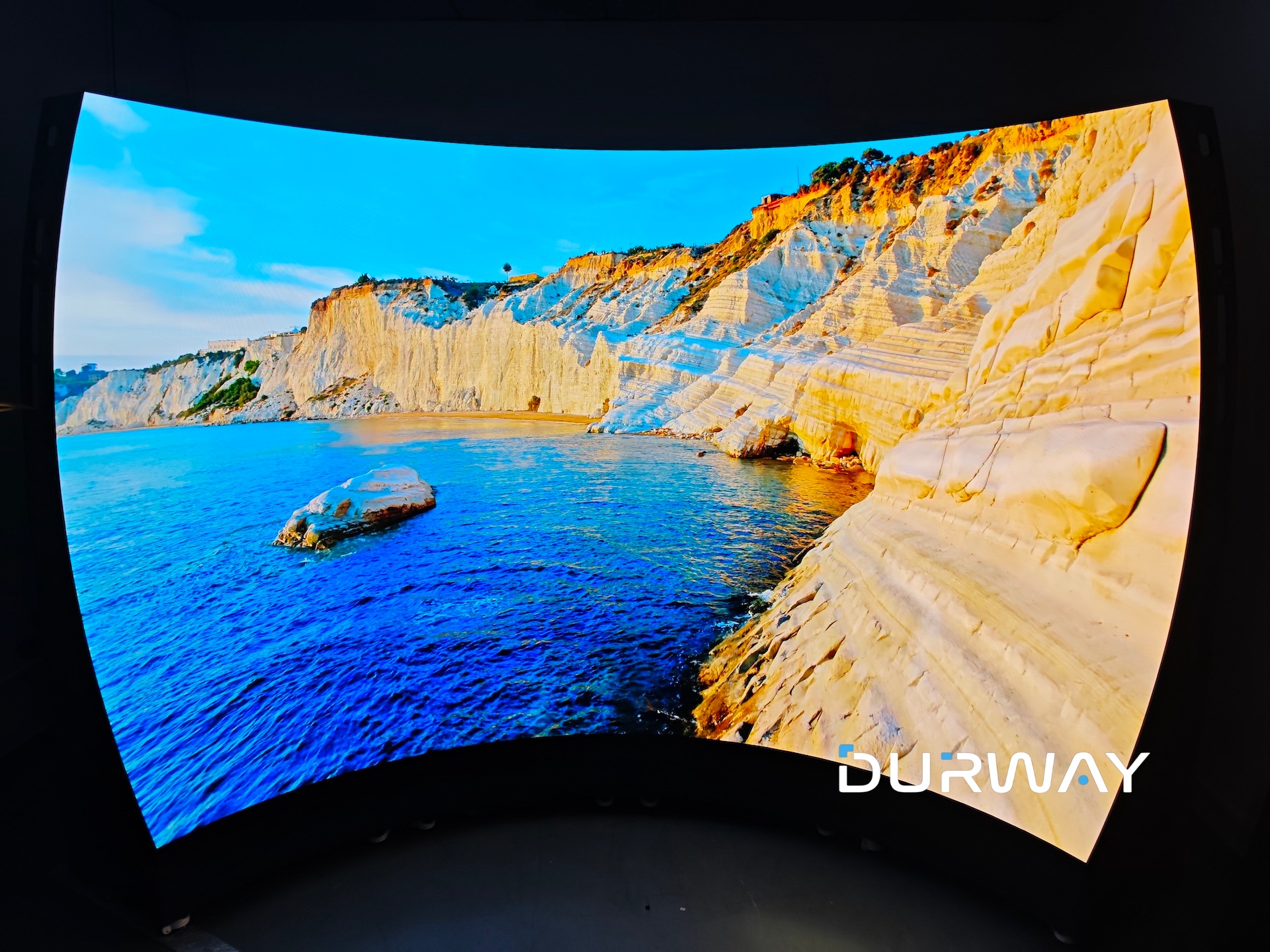
Next-Gen ROV/AUV Training Using LED Dome Displays
In the high-stakes world of underwater exploration and subsea operations, realism and response speed are critical to success. Whether you’re simulating a deep-sea sampling mission, conducting archaeological ROV operations, or preparing for complex subsea inspections, the quality of the visual interface directly impacts mission performance and operator accuracy.
Traditional flat-screen training setups often fall short in providing immersive depth perception or seamless spatial awareness. Today, ROV/AUV training systems integrated with HD LED dome display technology are transforming how marine engineers, research institutes, and defense organizations prepare for underwater challenges.
The Need for Realistic Subsea Training Environments
Subsea vehicle operations, especially those involving Remotely Operated Vehicles (ROVs) and Autonomous Underwater Vehicles (AUVs), demand rapid decision-making under pressure. A single misjudged distance or delayed response can result in significant asset loss or mission failure.
This is why high-fidelity training and replay systems are not a luxury—they are a necessity. Modern ROV/AUV training platforms simulate operational conditions with low latency and high refresh rates, enabling “eye-hand-machine” coordination that mimics real-world subsea conditions. When coupled with immersive visual interfaces like curved or dome-based HD LED systems, they provide spatial cues that flat screens cannot replicate.
What Makes HD LED Dome Systems Ideal for ROV/AUV Training?
1. Seamless Immersion and Depth Perception
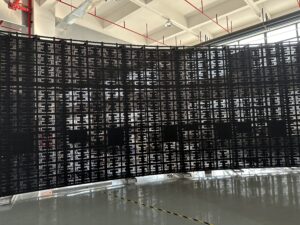
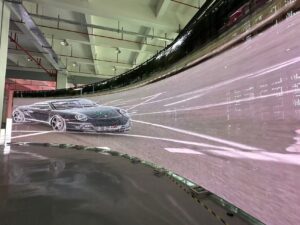
Unlike segmented monitor walls or basic CAVE systems, a high-resolution LED dome offers a continuous field of view ranging from 120° to 240°, encompassing the operator’s peripheral vision. This allows users to train within an environment that mirrors the visual immersion of actual underwater missions—critical for depth judgment and spatial orientation.
2. High Refresh Rates with Low Latency
A robust ROV/AUV training system must be able to track and render motion accurately. HD LED domes powered by systems supporting 120Hz or even 240Hz refresh rates eliminate image lag and ghosting, allowing for real-time responses to simulated subsea dynamics. When trainees move robotic arms or adjust thrusters, the visual feedback must feel immediate and fluid.
3. Long-Term Stability Without Brightness Decay
Unlike projection domes that suffer from lamp aging and brightness inconsistencies, LED domes offer stable luminance and color fidelity over extended periods. This ensures consistent training conditions and supports long-term calibration of perception and control algorithms.
4. Customizable Visual Ecosystem for Research Use
Institutions focused on underwater robotics or sensor fusion can benefit from the dome’s ability to integrate:
3D bathymetric renderings
Simulated sonar overlays
Visual-SLAM test environments
This makes the platform not only suitable for operator training but also ideal for hardware-in-the-loop (HIL) or software-in-the-loop (SIL) algorithm testing in perception–decision–control pipelines.
Mission Replay: The Overlooked Hero in Underwater Training
Replay functionality adds a critical analytical layer to training and R&D. Operators and researchers can:
Review operator behavior during a complex mission
Analyze time-stamped decision paths
Replay environmental variables for algorithm benchmarking
In both academic and defense sectors, the ability to visualize and analyze past missions enhances knowledge retention, supports compliance documentation, and drives continuous improvement.
Key Application Scenarios
Pipeline Inspection Training
Visual immersion helps trainees simulate navigating confined subsea infrastructure.
Shipwreck Archaeology Simulation
Depth perception and object manipulation are improved under dome visualization.
Deep-Sea Sampling Practice
Training with visual distortion cues allows for improved grip and control during robotic sampling.
Sensor Calibration & Perception Algorithm Testing
HD domes provide a controlled and repeatable visual environment for evaluating SLAM, obstacle avoidance, or sonar-vision fusion systems.
Why Choose a Professional Indoor System?
An indoor HD LED dome system offers a lot of benefits:
Controlled lighting environments
Easier integration with laboratory-grade hardware
Longer display lifecycle with minimal technical degradation
For research institutions, defense applications, and ROV/AUV equipment manufacturers, the choice is clear: investing in an indoor training and replay platform delivers greater precision, durability, and data fidelity.
More information, please visit: https://durway.com/led-simulator/
Insight
Forward-thinking organizations in marine technology, offshore energy, and ocean research are turning to HD LED dome systems to elevate their ROV/AUV training and simulation capabilities. These cutting-edge platforms deliver immersive, lifelike environments that sharpen operator skills and accelerate innovation. By combining realism with actionable insights, they empower teams to reduce mission risk, improve operational outcomes, and lead in subsea excellence.
Conclusion
As the underwater robotics industry accelerates toward greater autonomy and mission complexity, training systems must evolve in tandem. HD LED dome systems are setting a new standard for ROV/AUV training platforms by combining immersive visuals, low-latency responsiveness, and replay analytics.
These platforms are not just training tools—they are research accelerators, risk mitigators, and decision-making support systems for the most challenging underwater environments.
Visit www.durway.com to explore how our solutions are transforming subsea training, research, and operations. Schedule a live demo or request a product briefing today. XeltovoPrime