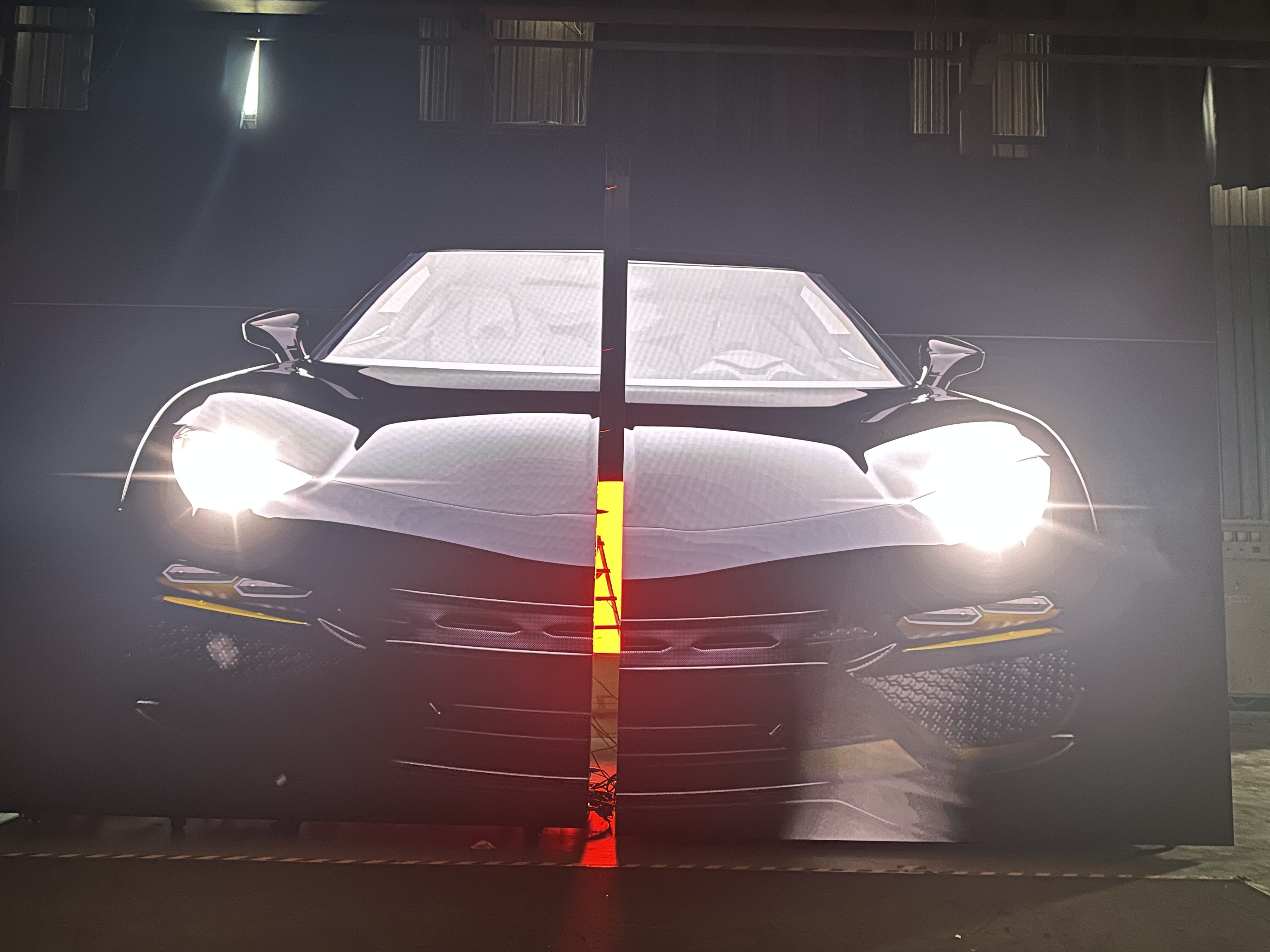
The entertainment and broadcasting landscapes are undergoing a monumental paradigm shift. For decades, the industry relied heavily on green screens and extensive post-production compositing to build imaginative worlds. Today, that workflow is being rapidly replaced by Virtual production—a revolutionary technique that utilizes immersive XR (Extended Reality) LED volumes to display real-time, photo-realistic CGI backgrounds directly behind actors and presenters.
However, transitioning from traditional sets to a cutting-edge XR studio is not as simple as purchasing a standard digital display. The cameras used in professional filmmaking and broadcast television are incredibly sensitive. If the LED wall lacks the precise technical specifications required for on-camera performance, the final footage will be plagued by visual artifacts, flickering, and color banding.
With over 30 years of experience engineering custom LED solutions for the world’s most demanding industries, Durway System Corp understands the intricate balance of optics, electronics, and structural design required for flawless virtual production. In this comprehensive guide, we will explore the essential technical requirements and pixel pitch considerations you need to know when choosing the right XR LED screen for your studio.
Key Technical Requirements for On-Camera LED Displays
When an LED screen is filmed by a high-definition cinema or broadcast camera, it behaves very differently than when viewed by the naked human eye. To ensure seamless In-Camera Visual Effects (ICVFX), your LED display must meet several non-negotiable technical benchmarks.
Defeating the Moiré Effect
One of the most common and frustrating challenges in shooting against an LED screen is the Moiré pattern. This optical phenomenon appears as strange, wavy, or rippling lines on the camera footage. It occurs when the pixel grid of the LED display interferes with the pixel grid of the camera’s digital sensor.
To eliminate moiré, studios must invest in LED screens engineered specifically for broadcast. This involves utilizing advanced, non-reflective LED masks that diffuse light optimally, coupled with an ultra-fine pixel pitch. Furthermore, experienced custom LED screen engineers can calculate the exact optimal shooting distance—the point at which the camera can focus on the subject while the LED background falls into a smooth, natural depth of field (bokeh), completely neutralizing any grid interference.
Ultra-High Refresh Rates (7680Hz and Beyond)
In consumer electronics, a 60Hz or 120Hz refresh rate is perfectly acceptable. In the realm of XR studios, it is a recipe for disaster. If the screen’s refresh rate does not vastly exceed the camera’s shutter speed, the recorded footage will exhibit aggressive scan lines, black bars, and intense flickering.
For high-end virtual production, a standard 3840Hz refresh rate is often just the baseline. To ensure absolute stability during high-speed tracking shots, slow-motion recording, or dynamic live broadcasting, top-tier XR LED screens push refresh rates to 7680Hz or higher. This guarantees that no matter how the camera moves or what frame rate is selected, the background remains a solid, uninterrupted canvas.
Color Accuracy and High Grayscale (16-bit to 22-bit)
An XR volume is not just a background; it is an active light source that physically illuminates the actors and props on stage. Therefore, the color accuracy of the screen directly impacts the realism of the scene. Professional XR LED screens must be capable of rendering the full DCI-P3 color space, which is the standard for digital cinematic projection.
Equally important is the screen’s grayscale processing depth, typically ranging from 16-bit to 22-bit. In virtual production, scenes are frequently shot in low-light, moody environments. A standard commercial screen will suffer from “color banding” or blocky pixelation when displaying dark gradients. High grayscale capabilities ensure that even at 10% brightness, the LED screen maintains perfect detail, smooth shadows, and true-to-life color reproduction.
Genlock Synchronization and Frame Remapping
To achieve flawless synchronization between the physical camera and the digital wall, the entire system must be linked via Genlock (Generator locking). This technology aligns the drawing of each frame on the LED screen exactly with the opening of the camera’s shutter. Without Genlock support built into the LED processing system, studios will experience screen tearing and frame dropping, immediately shattering the illusion of the virtual environment.
Selecting the Perfect Pixel Pitch for Your XR Stage
The physical architecture of an XR studio usually consists of three distinct zones: the main background wall, the interactive floor, and the ambient ceiling. Each zone interacts with the camera differently and therefore requires a different pixel pitch (the distance in millimeters between the center of one LED pixel to the next).
The Main Background Wall (P1.2 to P2.8)
The primary backdrop is the most critical component of your volume, as it appears directly in the camera’s focal path. For intimate broadcast setups, newsrooms, or close-up film dialogue where the camera is positioned just a few feet from the screen, an ultra-fine pitch is mandatory. In these scenarios, utilizing advanced COB (Chip-on-Board) or Mini LED technology—such as the VistaPro series with a pixel pitch between P1.2 and P1.5—delivers uncompromised clarity and a completely smooth surface.
For larger cinematic volumes where the camera remains at a greater distance (typically 15 to 30 feet away), a pixel pitch of P2.3 to P2.8 is the industry sweet spot. This range offers an excellent balance of high visual fidelity, structural versatility, and budget efficiency for massive curved walls.
The LED Floor / Ground Screen (P2.0 to P4.0)
The floor screen grounds the actors in the virtual environment, providing realistic reflections beneath their feet. Because the camera rarely focuses directly on the floor pixels, the pitch can be slightly wider, generally between P2.0 and P4.0.
However, floor screens demand extreme structural integrity. They must support the weight of heavy camera cranes, vehicles, and staging equipment without damaging the internal diodes. Additionally, the surface must feature a specialized high-contrast, anti-glare matte mask to prevent the studio’s overhead lighting from washing out the floor visuals.
The Ceiling / Skydome (P3.9 to P6.0)
The primary function of the ceiling screen is not to display sharp images to the camera, but to cast dynamic, realistic environmental lighting and reflections onto the set below—such as the passing streetlights reflecting on a car windshield. Therefore, high brightness is prioritized over fine pixel pitch. A pitch of P3.9 to P6.0 is standard.
For highly specialized setups, custom LED screen engineering comes into play. Solutions like the SkydomeX LED Dome can be integrated to create a truly hemispherical lighting environment, enveloping the stage in seamless ambient light that reacts in real-time to the digital scene.
The ROI of Upgrading to an Immersive XR LED Volume
While the initial investment in a broadcast-grade XR LED screen is substantial, the long-term Return on Investment (ROI) for B2B production houses and broadcasters is undeniable.
The most significant financial benefit is the drastic reduction in post-production costs. By utilizing In-Camera Visual Effects, directors can see the final composite live on set. This eliminates months of expensive green screen keying, rotoscoping, and CGI rendering. What you shoot is what you get.
Furthermore, an XR volume offers unparalleled versatility. A single soundstage can be instantly transformed. It can function as a sleek morning newsroom at 8:00 AM, a high-tech corporate presentation space at noon, and a sprawling alien landscape for a sci-fi series by the evening. This maximizes real estate utilization and allows studios to take on a wider variety of lucrative projects without the downtime of building physical sets.
Lastly, talent performance improves dramatically. Actors and presenters no longer have to stare at a blank green wall and pretend to see a roaring ocean or a crowded stadium. The immersive LED environment provides natural sightlines and realistic lighting, leading to more authentic and compelling on-screen performances.
Why Engineering Expertise and Local Support Matter
Building a professional XR studio is a highly complex systems integration project. It is not simply about buying “off-the-shelf” hardware; it requires meticulous structural engineering, precise curvature alignment for curved walls, and seamless integration with complex tracking systems and rendering engines.
When your production schedule is tight and millions of dollars are on the line, relying on a trusted partner is essential. As a premier provider of creative and immersive LED solutions, Durway System Corp goes beyond manufacturing. We provide global engineering powered by vital US local support.
Operating out of our headquarters in El Monte, CA, our dedicated support team ensures that broadcasters and production houses across the United States and Canada have immediate access to technical assistance, spare parts, and on-site troubleshooting. When you are managing a live broadcast or a critical film shoot, having a partner with three decades of proven expertise and rapid local response ensures absolute critical stability.
Your vision deserves a canvas that will never compromise on quality. By understanding the intricate technical demands of moiré prevention, refresh rates, and precise pixel pitching, you can confidently invest in an XR LED screen that will elevate your productions to the absolute cutting edge of the industry.