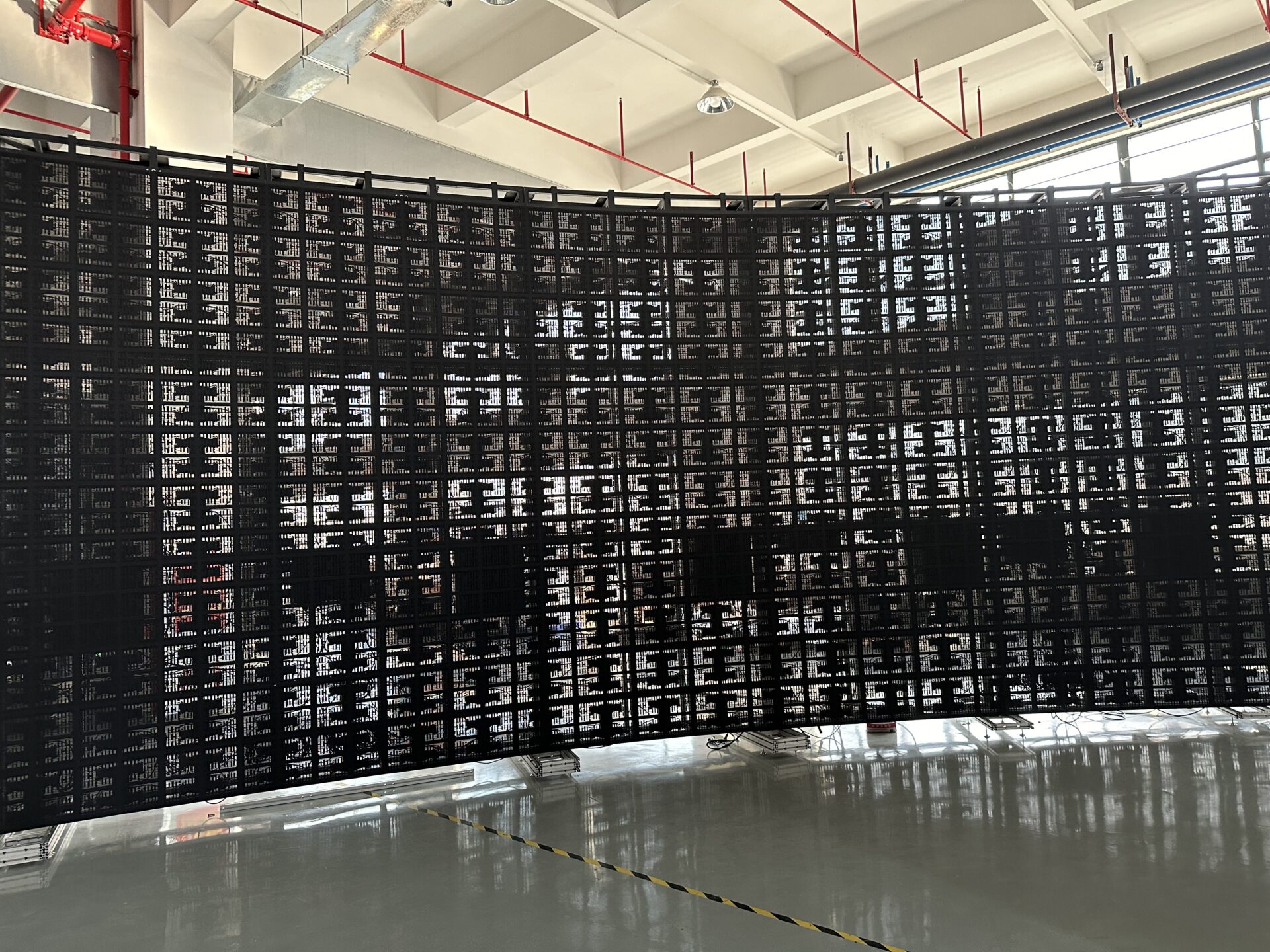
- Perforation size and distribution
- Pixel pitch and LED layout
- Distance between the speakers and LED surface
- Speaker orientation and coverage angle
- Frequency-dependent transmission loss
- Sound reflections between the screen and surrounding structure
- Cabinet, frame and cable obstruction
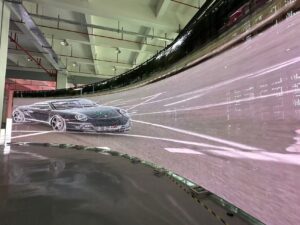
- Curvature of the LED display
A screen may provide sufficient open area but still affect high-frequency response or create different acoustic results at different listening angles.
For this reason, an acoustic-transparent LED solution should be evaluated using measurable acoustic data, not only its perforation ratio.
A Better Joint-Design Workflow
For LED domes and other immersive installations, Durway recommends a coordinated design process:
Dome Geometry → Speaker Layout → Acoustic Simulation → LED Perforation Design → Installation Coordination
1. Dome Geometry
The diameter, curvature, viewing area and audience position establish the physical environment for both the LED and audio systems.
2. Speaker Layout
The audio team determines the required speaker positions, coverage zones and sound-object locations based on the content and seating arrangement.
3. Acoustic Simulation
Coverage simulation helps identify sound-pressure distribution, overlap between speakers and possible acoustic problem areas.
Spatial-audio tools may also help the production team audition an immersive mix before the venue is completed. However, virtual monitoring does not replace loudspeaker coverage simulation, onsite acoustic measurements or LED transmission-loss testing.
4. LED Perforation Design
The LED layout and perforation pattern should then be developed according to the speaker positions, required acoustic openness and visual-performance targets.
This stage requires a balance between:
- Image resolution
- Brightness
- Contrast
- Structural strength
- Acoustic transmission
- Long-term reliability
5. Installation Coordination
The LED structure, speakers, power supplies, signal cables, ventilation and maintenance access must be coordinated as one system.
Poor coordination at this stage may result in speakers being partially blocked by cabinets, structural members or cable routing—even when the LED modules themselves are acoustically transparent.
Optical and Acoustic Performance Should Be Specified Separately
An acoustic-transparent LED datasheet should clearly distinguish between visual and audio-related performance.
LED Optical Performance
The optical section should include:
- Brightness
- Contrast ratio
- Color gamut
- Low-grayscale performance
- Refresh rate
- Viewing angle
- Surface reflection
- Color and brightness uniformity
Acoustic Performance
The acoustic section should include:
- Frequency response with and without the LED screen
- Frequency-dependent insertion loss
- Performance at different sound-incidence angles
- Recommended distance between the speaker and LED surface
- Speaker-placement guidelines
- Test conditions and measurement methods
Separating these two categories helps AV consultants and system integrators evaluate the complete performance of the solution instead of making decisions based only on pixel pitch and brightness.
The Value of Early Coordination
When the LED and audio systems are designed separately, compromises often appear during installation. Speakers may need to be relocated, the LED structure may block sound, or additional acoustic correction may be required.
Early collaboration can reduce these risks and provide several benefits:
- More accurate localization of sound and image
- More consistent coverage across the audience area
- Reduced redesign during installation
- Better coordination of structure, cables and maintenance access
- More predictable optical and acoustic performance
- A more convincing immersive experience
Durway EchoFlex for Immersive Environments
Durway EchoFlex is designed for projects where visual immersion and sound reproduction must work together. It can support flat, curved and dome-shaped applications for museums, planetariums, immersive theaters and experience centers.
Rather than treating the LED display as an isolated product, Durway works with AV integrators, acoustic consultants and content teams to coordinate display geometry, speaker locations, perforation requirements, supporting structure and installation details.
The goal is not simply to let sound pass through an LED screen. The goal is to preserve the relationship between image, sound and space.
Conclusion
Acoustic-transparent LED should be designed with the audio system—not around it.
The most successful immersive installations begin with coordinated decisions about dome geometry, speaker coverage, acoustic behavior, LED perforation and system integration. When these elements are developed together, the LED display becomes part of a complete audiovisual environment rather than an obstacle between the audience and the sound.
If you are developing an LED dome, immersive theater or museum experience, Durway can support the early-stage coordination of the LED display, acoustic requirements and installation system.